The goal of this tool is to define and analyze the labor market needs and to identify the economic sectors that have higher demand and skills and qualifications needed by the labor market and local business firms. "Explore business & job opportunities (the market)”. Find out the local business opportunities, find out which industries are hiring, and which products and services are needed by the community. Thus, the result of LMA is to help customers make informed plans, choices, and decisions for a variety of purposes, including business investment decision-making, career planning, and preparation, education and training offerings, job search opportunities, hiring, and public or private workforce investment).
The key to success is to develop the training module in close collaboration with the labor market that comprehensively addresses the needs of the labor market in the area of needed skills which are called professional skills/technical skills, life skills, and business skills. To ensure the quality of the training, the training module should be translated in
to local languages in line with the targeted districts/ regions.
The goal of this vision development skills training is to elicit the motivation of women and youth on the development process of their future visions, goals, and plans and increase their commitments on the journey to success. It is part of a pre-training approach that can be delivered before the actual employability skill training that helps to identify the motivation of trainees for employability skills training and assess their readiness for self-development, and at the end, it helps to select the interested and potential target groups.
The goal of this life skills and employability skills training is to equip jobseekers with a feeling of self-worth and confidence as well as interpersonal knowledge and skills to function more professionally in their future job environment. The training is intended to address the “Soft” elements or qualitative imbalance of jobseekers joining the labor market / industrial setup. In addition, the training seeks to promote the life skills of job seekers which are required to deal with the demands and challenges of everyday life. This life
skills training is essential for the employability of the jobseekers and it has a preventive goal to enhance
the resilience of the jobseekers in everyday situations at work, and private life.
The goal of this business development service is to improve entrepreneurial competencies and business development skills of target groups, existing SMEs/MSMEs, cooperatives, and private business firms. And also it provides market-oriented, comprehensive, tailored, and real-time services to women and youth entrepreneurs. Business Development Services (BDS) are “services that improve the performance of the enterprise, its access to markets, and its ability to compete. It includes an array of business services such as
training, consultancy, marketing, information, technology development and transfer, business linkage
promotion, etc., both strategic medium to long-term issues that improve performance and operational day-to-day issues. BDS plays a very important form of support for the development of MSMEs by providing a range of business advice, information, and support to the sector, as well as stimulating sustainable MSME development by improving the general business environment. They are generally viewed as a mechanism for addressing market failures which are particularly evident in transition economies, such as lack of information (market opportunities, rules, and regulations, access to credit, quality standards for export, etc.) which can act as a barrier to faster economic development and growth in a particular geographical area. Although this Primer refers primarily to BSCs, the framework to be presented applies to all the other mechanisms for implementing BDS. BDS is effectively a range of services designed to assist MSME entrepreneurs to operate efficiently and grow their businesses to contribute to economic growth, employment generation, and poverty alleviation.
Business-to-business (B2B) linkages are transactions between buyer companies and supplier companies. B2B linkages help to match suppliers with buyers for their products and/or services. A successful local B2B linkage is a win-win partnership for both buyers and suppliers. For buyers, they offer the opportunity to localize
aspects of their supply chains, potentially reduce costs and/or lead time, and increase their integration into local communities. Suppliers, expand market access, increase revenue streams, and create a potential for local employment opportunities. To this end, we have ample experience in promoting the establishment of mutually interdependent coops by interlinking different workable value chains and one member of cooperatives will provide input to the other cooperatives, based on competitive prices and an interlinked business model. This new business model creates a competitive (win-win) advantage for cooperatives established from different value chains b/c the supply and the demand are interlinked together.
It is a unique, innovative, and tested
the approach used to provide market-relevant employability skills training and reduce the mismatch between the training provider (labor supply) and the labor market (world of work). The principle of this approach is “Linking Skills to the labor market” and it is a journey from skills training to the labor market with a holistic and full package. The rationality behind the introduction of this approach is, providing skills training for youth and women is not enough b/c: (1) youth unemployment even among trained youth is very high in many countries including Ethiopia and (2) At the same time businesses often have a difficult time finding skilled staff who fulfills their requirement in the workplace. Therefore; in this innovative approach the mismatch issues will be solved by connecting companies, MSMEs‟s, TVETS, and government officials to jointly define the type of skills and competency needed for vacant jobs, building a long-lasting network to keep refining training for the labor market changes in the long run.
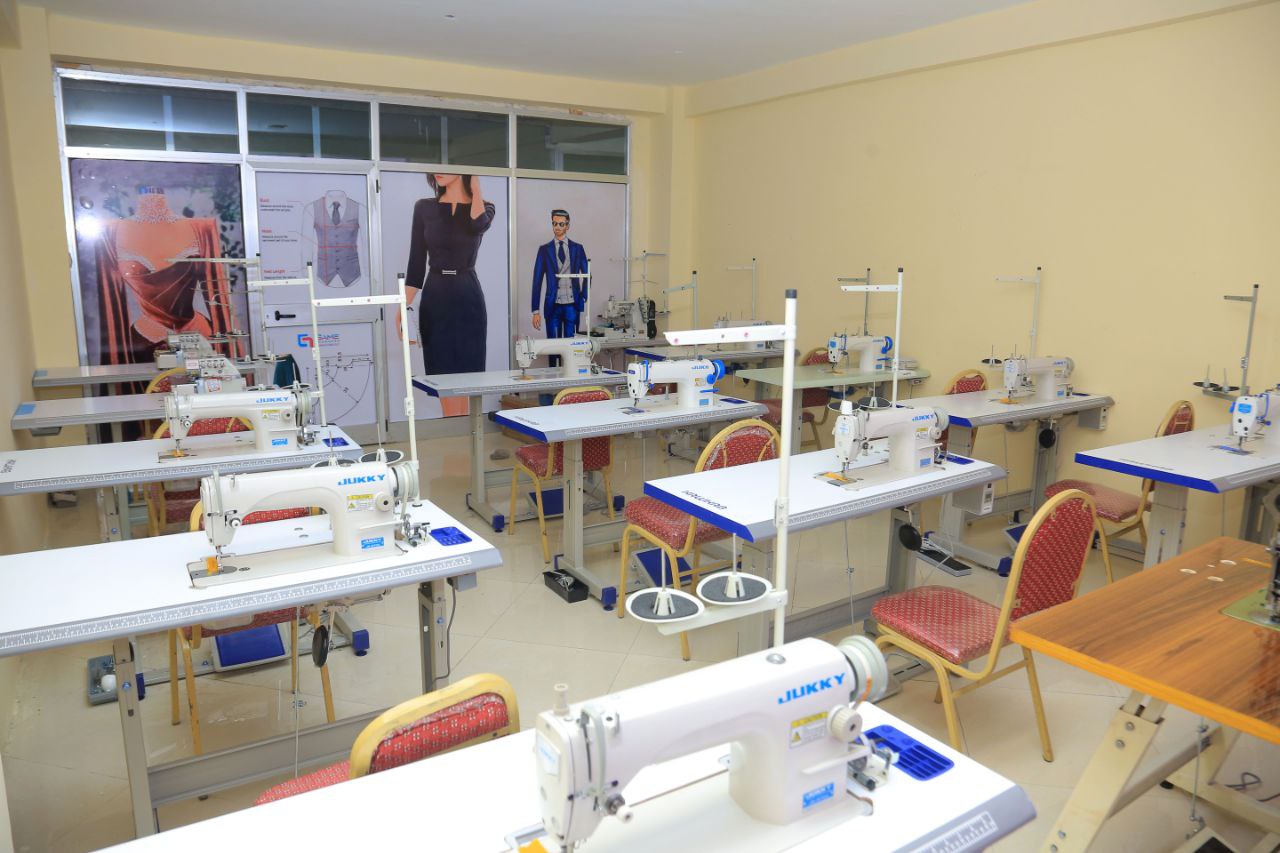
On-job skill training/Work-based learning is an approach that simulates the workplace so that women and youth gain real-world, hands-on skills. Learning by doing and using are the principal drivers of incremental innovation. In almost all fields of production of goods and services, the repetition of production tasks leads to a gradual improvement in the efficiency of production processes and product/service design and performance. The importance of such „learning by doing‟ processes has long been recognized, as has the central place of direct production workers in innovation as sources of work-based learning.
we have ample experience in workable value chain development by interlinking highly productive value chains (field of work) which will help to increase the livelihood diversification and resilience building of vulnerable communities, youth groups, and women.
The goal of an apprenticeship program is to improve the employability skills of women and youth. It should be provided with frequent support and follow-up in close collaboration with the world of work by making different consent of mutual advantages of
the training provider and companies/ SMEs (potential employers). Apprenticeships are a proven way to
build bridges between the worlds of education, training, and work. Apprenticeship can accommodate a
wide range of abilities and aptitudes because it reflects the equally wide range of skills required in a
modern economy. As was indicated earlier, the best way to acquire core employability skills is on the job. Given that apprenticeship systems combine in-class and workplace training it is ideal for transmitting these skills. A youth apprenticeship combines on-the-job training (provided by an employer in a business, industry, or related organization considered essential to the economy of a local area, region, or state) with job-related academic instruction in a curriculum aligned with national
skills standards for a specific career pathway. Ideally, youth apprenticeships develop and grow as technologies advance and technical training requirements evolve. to improve the employability skills of women and youth; we have been provided apprenticeship training with frequent support and follow-up in close collaboration with the world of work by making different consent of mutual advantages of the training provider and companies/ SMEs (potential employers). Apprenticeships are a proven way to build bridges between the worlds of education, training, and work. Apprenticeship can accommodate a wide range of abilities and aptitudes because it reflects the equally wide range of skills required in a modern economy. As was indicated earlier, the best way to acquire core employability skills is on the job. Given that apprenticeship systems combine in-class and workplace training it is ideal for transmitting these skills.